- TOP
- Product Insights
- Product Guide

Product Insights
Product Guide
Realising high-precision optical communication is our mission.
Through fusion splicers, we aim to further connect and support the world.
To achieve this, we want to minimise the burden on those in the field who perform hundreds of splicing operations daily and ensure they can use these essential tools whenever and for as long as possible with peace of mind.
We also believe that enabling everyone to achieve optimal splicing in various environments and conditions is one of our many important goals. With the knowledge and experience we have gained together with colleagues worldwide, Sumitomo Electric delivers this article in the hope that it will help you make the most satisfying product choices.
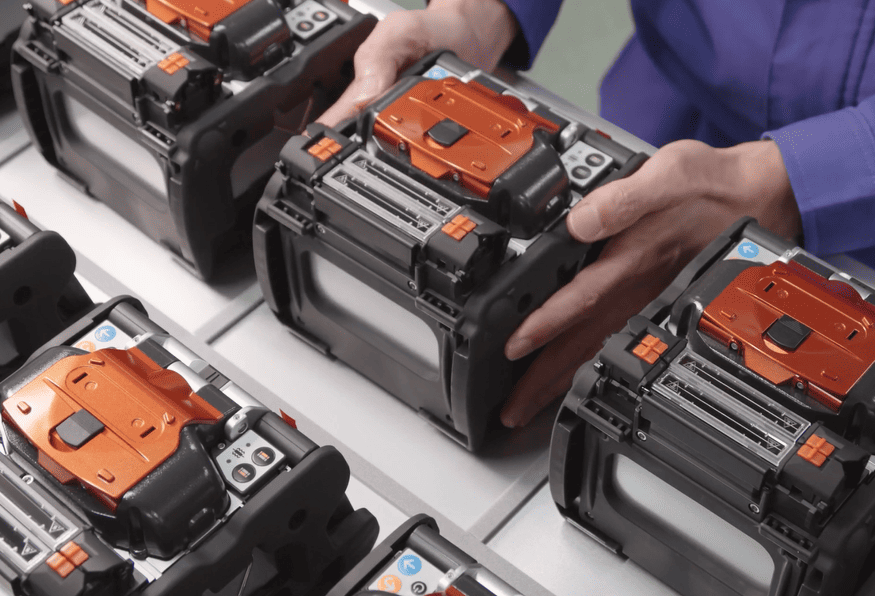
When choosing a fusion splicer, many people first look at catalogue specs and performance figures. While numbers are important, are they really everything?
In the field, what matters directly to work time and splice precision is whether operators can work intuitively and reliably, without stress even during long hours. Factors like outdoor usability, ease of replacing consumable parts, and repair/support systems often only become clear once the product is actually used.
Here are specific points to check when comparing and evaluating fusion splicers:
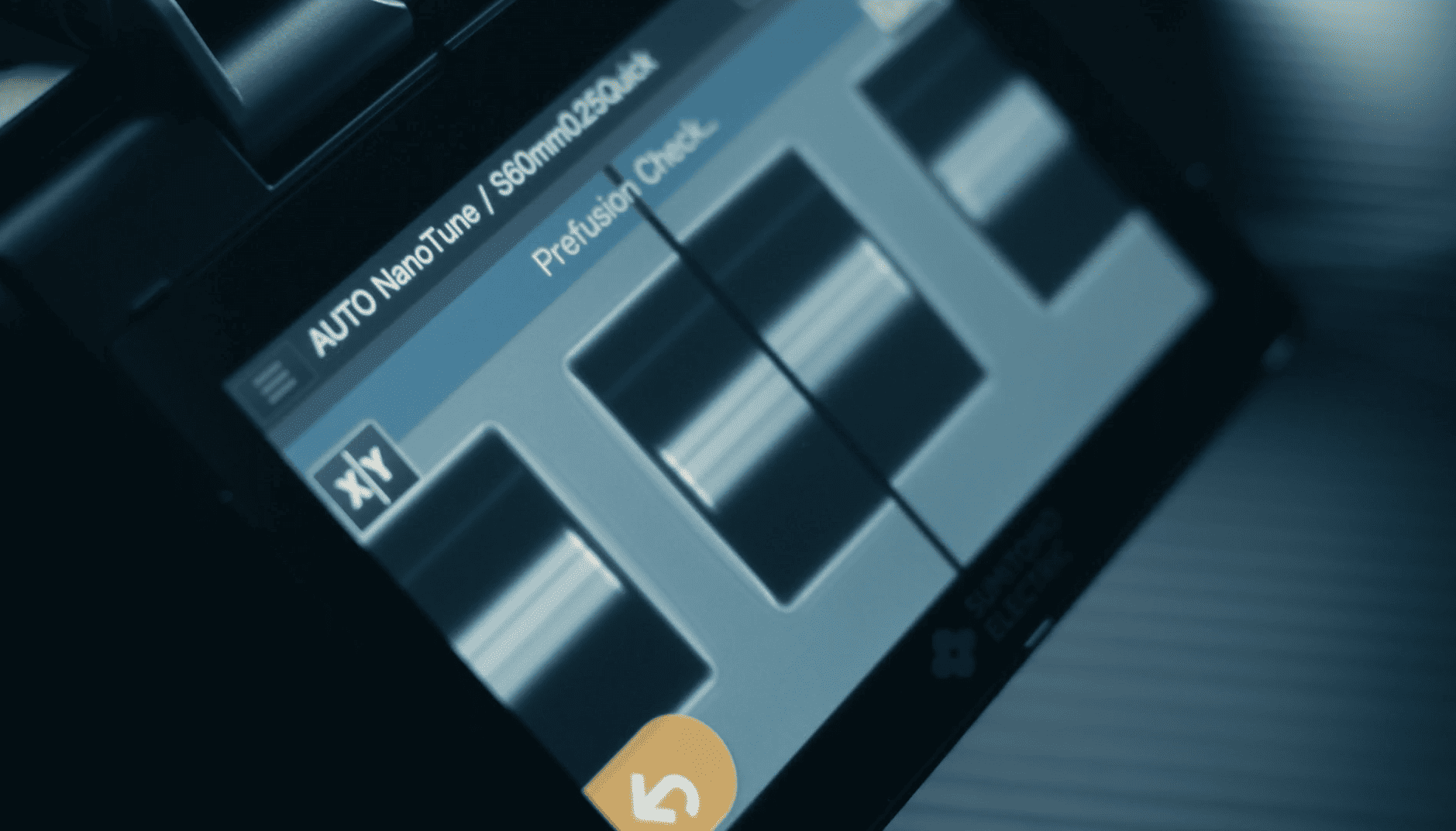
Splice loss affects optical signal quality, so high precision is vital for reliable communication. With growing demand for long-distance communication, accuracy is increasingly critical.
Checkpoints:
✓ Target spec is 0.01 dB (standard splice loss).
✓ Small difference between estimated and actual splice loss.
✓ Compatibility with various fibre types and automatic fibre identification.
✓ Especially important as fibres with more complex structures (e.g. G.654.E fibres) are increasing, making identification more difficult.
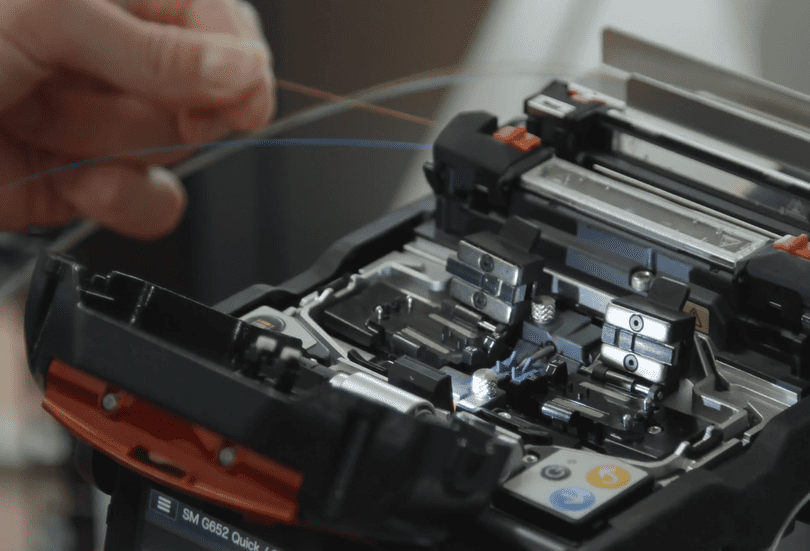
To shorten construction time, contractors often handle many jobs (sometimes 200+ splices/day). Maintaining quality while reducing time is key. Protection sleeve heating time is also important.
Checkpoints:
✓ Standard splice time, standard heating time.
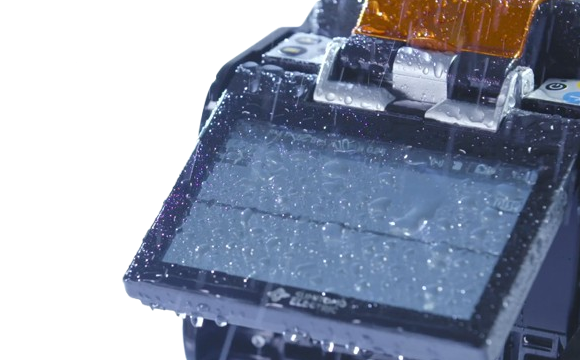
Frequent breakdowns or replacements affect both cost and project schedules. Fusion splicers are used worldwide, from mountains to deserts, requiring resistance to altitude, cold, and heat. They must withstand accidental drops and exposure to water.
Checkpoints:
✓ Heat/water/shock resistance.
✓ Pre-shipment testing, evaluation during development.
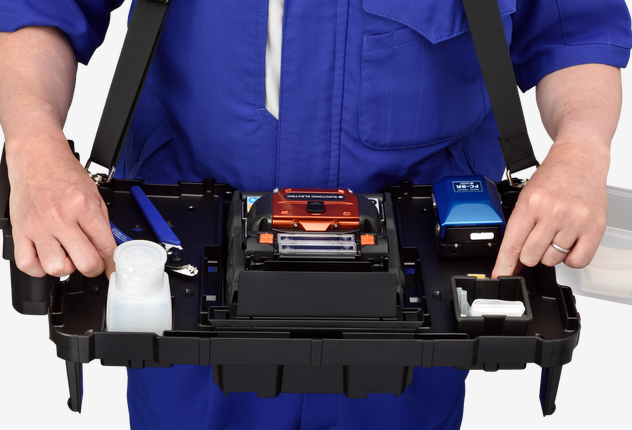
Operator skill and experience vary. Even first-time users must achieve high-precision splicing. Since fusion splicers are used globally, the hand shape and dominant hand of the user may differ.
Checkpoints:
✓ Clear workflow upon start-up.
✓ Screen size/visibility, ergonomic work tray, manual clarity, availability of web tutorials.
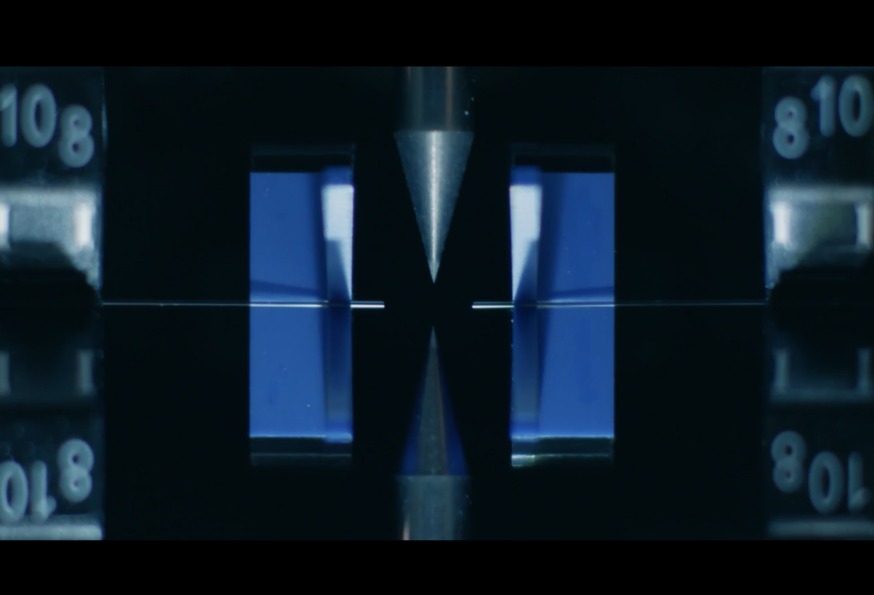
Misalignment or dust on grooves/lenses increases loss and reduces quality. Drops or mishandling may shift the V-groove or microscope.
Checkpoints:
✓ Dust/water protection.
✓ Use of high-quality, precise components (e.g. electrodes).
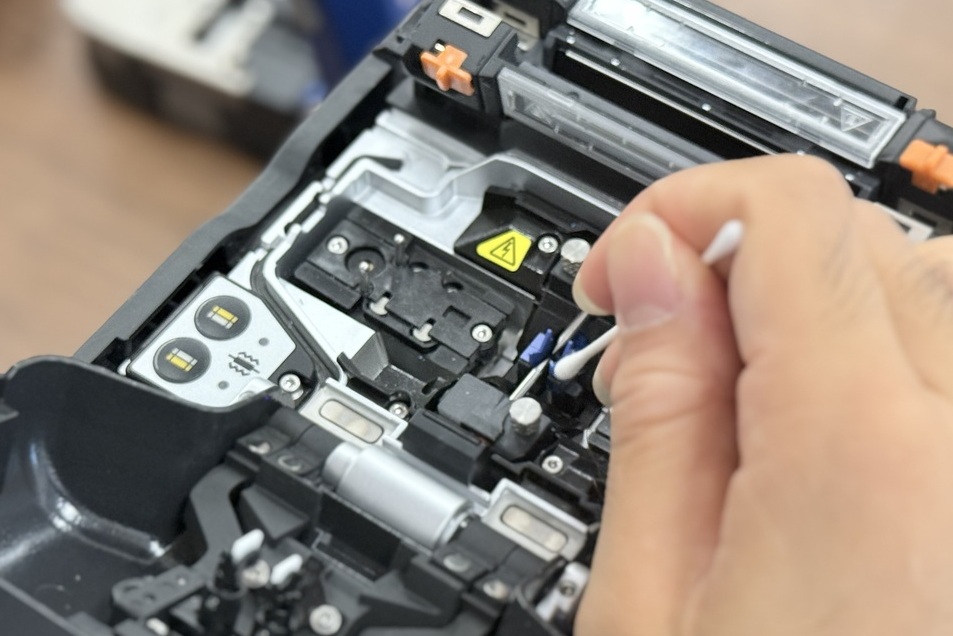
Dust and dirt accumulation over time can reduce accuracy. A design for easy maintenance is necessary.
Checkpoints:
✓ Whether parts like LEDs, V-grooves, CMOS cameras, heaters, and electrodes can be cleaned by the user.
✓ Frequently replaced parts (V-grooves, electrodes) should be user-replaceable.
✓ Self-inspection functions.
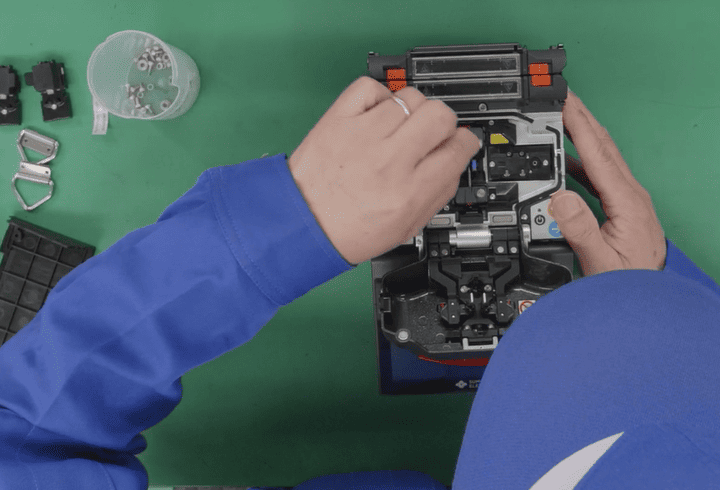
Support before and after purchase is crucial. Local-language support must handle nuances and technical terms. Sometimes local bases alone cannot resolve issues—real-time information sharing with the development team is essential.
Checkpoints:
✓ Availability of nearby distributors with proper certification/skills.
✓ Proven track record, wide service network with experience in diverse environments.
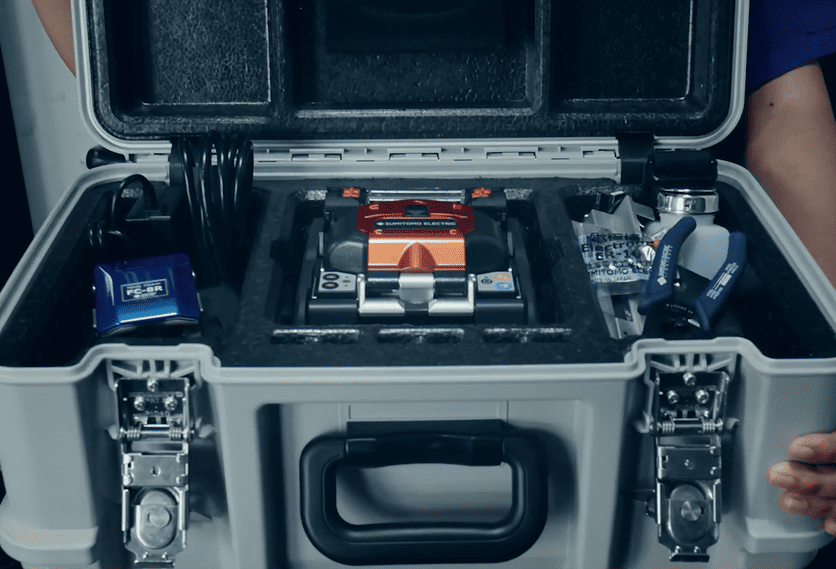
Below, we introduce how Sumitomo Electric’s fusion splicers address each of these key points.
1. Accuracy
Achieves 0.01 dB (SMF) splice loss with our top model.
2. Speed
Achieves 5-second operation (SMF) with our fastest model; dual-heater models further reduce work time.
3. Durability
Industry-leading IPX2 waterproof and IP5X dustproof ratings. Can operate even when splashed from an angle. Tested in hot and humid conditions. Built with carefully selected, high-quality parts for long-term use. Motors and shields are tested for hundreds of thousands of cycles.
4. Usability
Work trays designed for both left- and right-handed users; belt positioning optimised.
5. Error Prevention
Equipped with our proprietary NanoTune™ AI-based alignment adjustment. Tool-less electrode replacement. Dustproof sheets for multi-core machines.
6. Ease of Maintenance
Detects issues such as dirty LEDs and lenses and displays cleaning instructions. If an issue remains unresolved, data can be uploaded to SumiCloud™ for expert support.
7. After-Sales Service
Overseas distributors are trained directly in Japan. Skilled staff provide on-site resolution. Unexpected issues are fed back to development. A proven track record of solving global issues.

Dedicated service engineers are always nearby to ensure customers can use their equipment in optimal condition for years, all supported by high-quality after-sales service.
Worldwide, Sumitomo Electric runs 11 subsidiaries and partners with 150+ distributors and 100+ service centres across 80+ countries.
Check a nearby Sumitomo Electric regional sales office here:
[https://global-sei.com/sumitomo-electric-splicers/why-sumitomo-electric/#contact](https://global-sei.com/sumitomo-electric-splicers/why-sumitomo-electric/#contact)